From Overwhelmed to Organised:
How I Used ADHD Coaching and An Executive Function Lens to Overcome Procrastination

Today, I did a task I have been procrastinating for a very long time. Sorting out my wardrobe. I’m fortunate enough to have a walk-in space in my current house but over the last few years, I have let it get absolutely out of control. I would go in there with the best intentions and feel immediately overwhelmed, shut the door and walk away. But having such a cluttered, disorganised space in my home was having a negative effect on me.
If I’m honest, I felt somewhat uncomfortable coaching others on similar challenges knowing that I wasn’t putting it into practice myself. But knowing that something needs to be done, is not enough to spark motivation in an ADHD brain. There is more to it as I know so well from coaching others. So I decided to coach myself through it and consider the task through the lens of Executive Function (the set of cognitive skills which those of us with ADHD or other neurodivergence can face difficulties with).
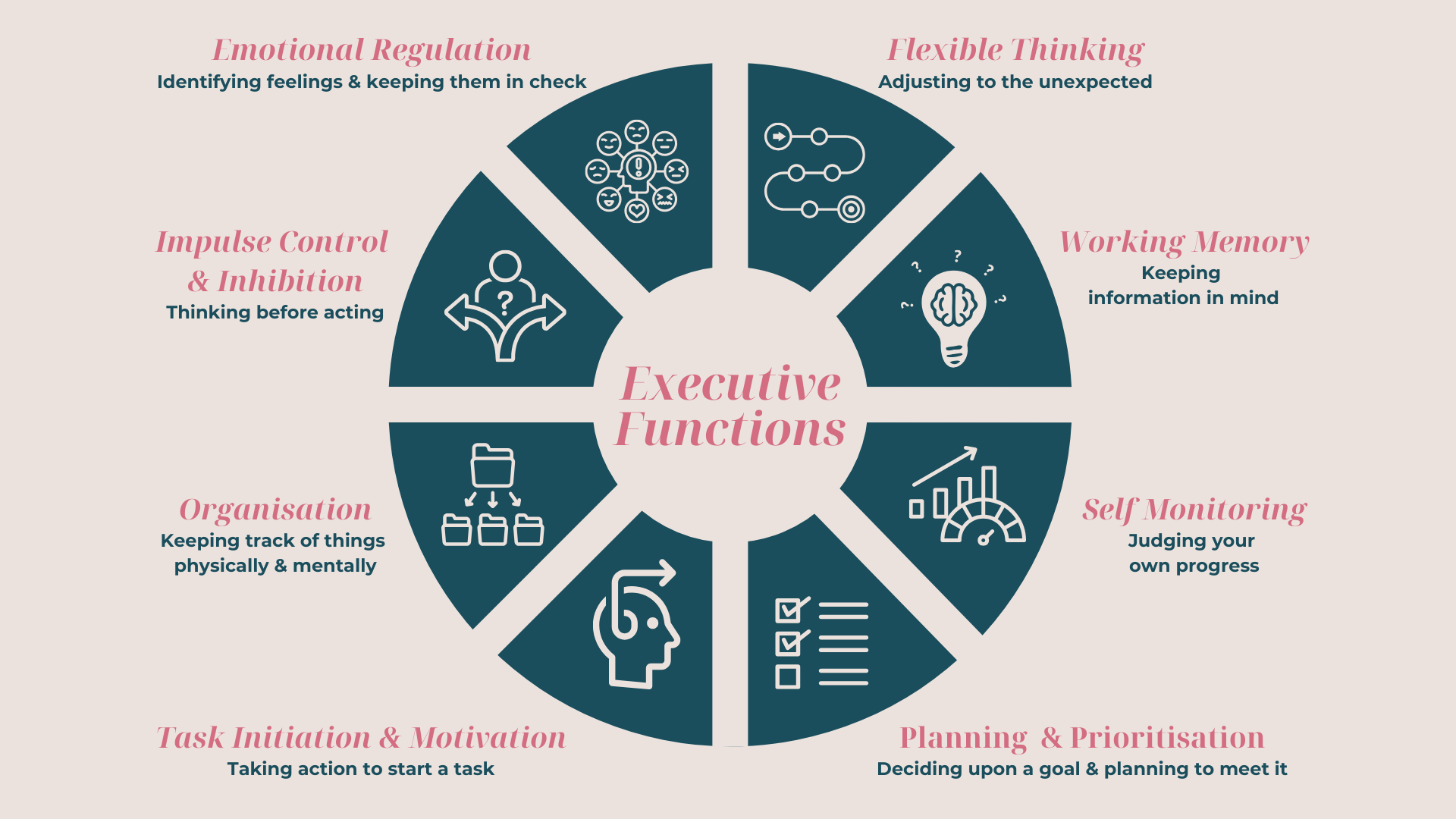
Wheel of Executive Function
The first and most obvious challenge I was struggling with was procrastination. Task initiation and motivation are common challenges with ADHD as dopamine regulation differences mean that our nervous system is not activated by importance but by interest. I decided to consider a model I use in coaching and ask myself the same questions I would ask a coaching client:
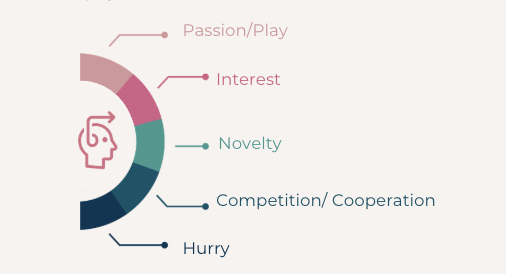
PINCH Model for
Interest-Based Nervous System
What could make my task more playful or meaningful?
As a family, we always try to make charitable donations at this time of year to mark each of our birthdays and to mark Christmas. It’s something especially meaningful to my daughter who feels injustice deeply and cares about making the world a better place. I decided that in clearing out my wardrobe I could donate some clothes to charity and sell others and make a donation to another charity. This added a layer of meaning to the task which added engagement.
How might I connect this task to something I already care about or I’m interested in?
I love clothes and putting together nice outfits, but my inaccessible wardrobe was making it difficult for me to enjoy the clothes I have. The thought of being able to easily access all my clothes and enjoy them again helped me feel engaged with the outcome.
Where could I add novelty to this task?
The novelty would be the idea of having an organised, uncluttered, useable wardrobe. But I knew the dopamine from this would not be accessible during the task, so instead, I put on a favourite playlist and used the music to trigger a dopamine boost.
Who could I team up with, or how could I make this a game?
This one was easy. My daughters were keen to be involved on a rainy, boring Sunday and laugh at my fashion choices over the years. They were also invested in the value of the charitable donation so it was easy to ask for their help.
How could I add a gentle deadline or time limit?
We are currently working our way through a list of costume dramas we want to watch. So, we set ourselves a goal, not to finish the task but to at least have the wardrobe in a useable state by 4pm so we could snuggle up with the next costume drama on our list: “Emma”.
Other Executive Function challenges I considered were:
Planning & Prioritisation
Organisation & Time Management
Inhibition & Impulse Control
Should I start with my knitwear or my shoes? Should I start with what I want to keep or what I want to get rid of? How should I organise the things I am keeping/ selling/ donating. How will I stop myself becoming distracted by something else and wandering off mid-task or how do I avoid hyperfocus and spending the entire day on this task? Recognising these challenges was the most important step so that I knew what obstacles I was facing.
Too many decisions would become quickly overwhelming. So I made myself one simple prioritisation rule: “Might I wear this again or definitely not?”. I decided that even if it was a “Maybe”, I would still keep it. The only things I would get rid of to start with were the things I would absolutely, 100%, definitely never wear again. Having that simple rule helped me to avoid overwhelm and just make a very simple decision.
The organisation also needed to be simple. Start with keep / not keep. Then divide the ‘not keep’ pile into sell / donate. I also built in two break points for drinks and snacks between each of those stages. To aid my impulse control, I made sure that during my short breaks, I left my phone (my biggest distraction) in my wardrobe so that I would HAVE to go back. I set myself a time I would like to be finished by and a reward if I could stick to it. I also asked my daughters to give me regular time-checks in case I became too absorbed and lost track.
But one of the most unexpected challenges I became aware of was with Emotional Regulation. Before looking at the task through the Executive Function lens, I had not considered that there were so many emotions tied up in the task. My body shape and my lifestyle have changed in my 40s and this meant that many of the clothes in my wardrobe no longer fit me or my life. I’m much more likely to be found on a campsite than a cocktail bar these days. There were so many emotions I had not realised: Nostalgia from the memories of wearing outfits to certain occasions; shame about the items with tags still on which had not been worn; embarrassment at some of my fashion choices (fuelled by my daughters’ mirth); sadness at the realisation that some of the outfits will not be worn by me again; joy at finding some items I had forgotten about; and guilt about the amount of clothes I have bought over the years. Once I had realised this, it became easier to recognise each emotion as it arose, to acknowledge it and process it.

Something else tied to emotional regulation is my leaning towards perfectionism and a “Be Perfect” driver. For me, I am aware that this is a protective behaviour which stems from experiences of Rejection Sensitive Dysphoria but it is a common form of self-sabotage and can often prevent me from starting a task. In this case, I would be trying to protect myself from my own internal criticism of not having done well if the task wasn’t fully complete and perfect. With my self-coaching mode activated, I brought some curiosity to the situation: What does ‘perfect’ look like? Is ‘perfect’ achievable here? What would happen if ‘perfect’ cannot be achieved? What could ‘good enough’ look like? Would ‘good enough’ be achievable here?
I decided that ‘good enough’ would look like a reduction in my clothes, a more useable wardrobe and a donation to charity, no matter how small. ‘Good enough’ would be making a start rather than not starting at all. ‘Good enough’ would be knowing when to stop and acknowledge my progress and the challenges I had tackled and being kind to myself. Allowing myself to snuggle up with my girls and watch the next costume drama on the list.
I’m happy to share that although my wardrobe is not perfect, it is now, good enough. My daughters were a great help and really enjoyed teasing me over my fashion choices. I managed to reduce my clothes by around one quarter and made a significant donation to charity. It is now organised into rough sections so my clothes should be easier to find and keeping on top of putting away clean laundry should be easier. We managed to be snuggled with cups of tea and biscuits, watching ‘Emma’ by 4:30pm.

My wardrobe after decluttering
If you are interested in learning how ADHD & Neurodivergent Coaching could help you, I’d love to hear from you. Schedule a free 30 min intro call and we can talk it through.